

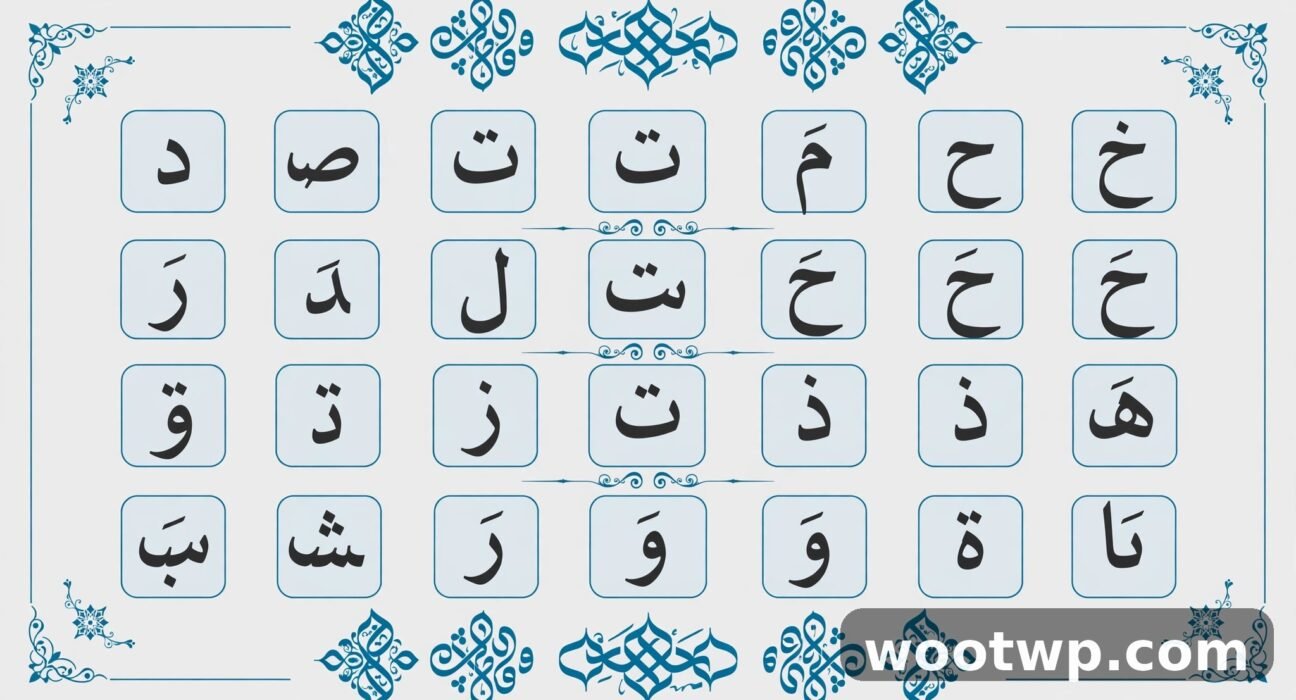
How to Learn the Arabic Alphabet: 7 Easy Steps for Beginners
The Arabic alphabet looks like a wall when you first see it. Strange shapes, writing that runs the other way, letters that change form in the middle of a word. If you want to know how to learn the Arabic alphabet without wasting weeks on the wrong method, start here: you only need 28 letters, a handful of vowel marks, and a daily habit of reading and writing them by hand. This guide breaks the whole job into seven clear steps, shows you how the letters join up, and gives you a simple 14-day plan you can follow from today.
You will learn the 28 letters grouped by shape so they stick faster, the sounds that do not exist in English, the four forms of each letter, the short vowel marks that tell you how to read, and the mistakes that slow most beginners down. By the end you will be able to sound out real Arabic words, not just recite letter names.
Table of Contents
- What Is the Arabic Alphabet?
- How to Learn the Arabic Alphabet in 7 Steps
- The 28 Arabic Letters Grouped by Shape
- Short Vowels, Long Vowels, and the Marks That Change Meaning
- Common Mistakes When You Learn the Arabic Alphabet
- How Long Does It Take to Learn the Arabic Alphabet?
- Practice the Arabic Alphabet on Your Phone With Baraem
- A Simple 14-Day Plan to Learn the Arabic Alphabet
- FAQs About How to Learn the Arabic Alphabet
- Conclusion
What Is the Arabic Alphabet?
The Arabic alphabet has 28 letters. It is written from right to left, and most letters join to their neighbours, so Arabic looks like flowing handwriting even in print. There are no capital letters. Each letter stands for a consonant sound, and short vowel sounds are shown with small marks above or below the letters, called harakat. You will often see Arabic written without those marks, which is why beginners should learn them early: the marks are your training wheels, and they come off later.
The same 28 letters serve both Modern Standard Arabic, the formal language of news and books, and the everyday spoken dialects from Morocco to the Gulf. Learn the script once and you can read in any of them, even though the spoken words differ. The alphabet is also called an abjad, because it is built around consonants. Omniglot's Arabic alphabet page shows every letter with its forms and sounds, and it is a handy reference to keep open while you study.
Why the Alphabet Comes First
Some beginners skip the script and learn only from transliteration, which is Arabic written in Latin letters. That feels faster for a week, then it becomes a ceiling. Transliteration is not standard, so the same word is spelled five different ways, and you can never read a real sign, menu, or page of Arabic. Learning the alphabet first is slower for two days and faster for every day after that. Once you can sound out words, every street sign and subtitle becomes practice, and vocabulary sticks better because you see the word, not just hear it.
How to Learn the Arabic Alphabet in 7 Steps
Follow these steps in order. Each one builds on the last, and skipping ahead is the main reason beginners stall.
- Learn the 28 letters in shape groups, not in alphabet order. The traditional order groups letters that look nothing alike. Shape groups are easier on memory, because letters that share a shape differ only in dots. Learn the dots group (ba, ta, tha) together, then the curves, then the loops. The full grouping is in the next section.
- Say every letter out loud, with audio. A letter is a name, a sound, and a shape. The name alone will not help you read. Listen to a native speaker say each letter, repeat it, and record yourself if you can. Arabic has sounds English does not, such as ayn (ع) and the emphatic consonants, and your mouth needs practice to make them. Do not move on until you can hear the difference between plain and emphatic pairs, such as seen (س) and sad (ص).
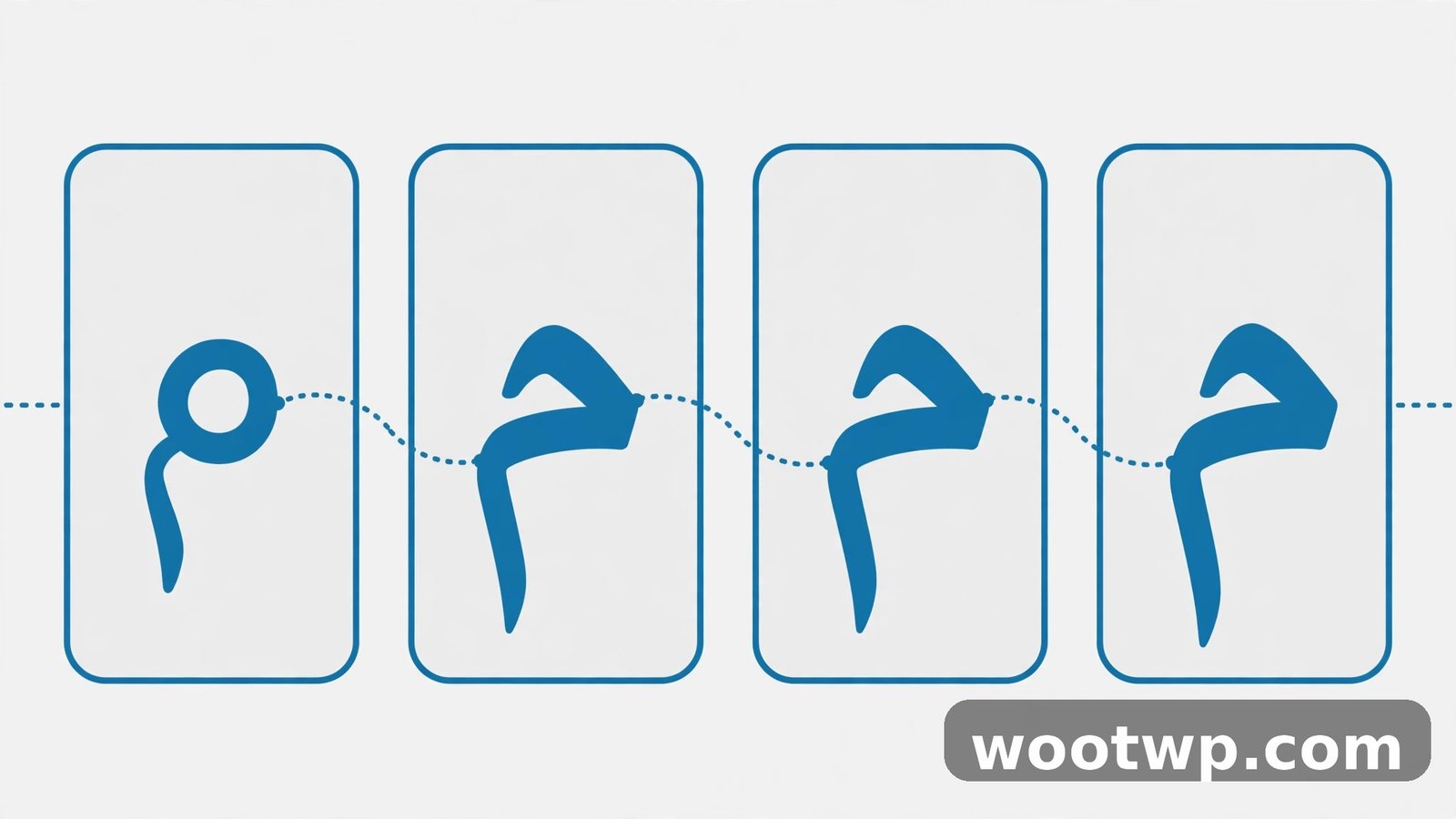
- Learn the four forms of each letter. Most letters look different depending on where they sit in a word: alone, at the start, in the middle, or at the end. Take ba (ب). Alone it is ب. At the start of a word it is بـ, in the middle ـبـ, and at the end ـب. Learn the pattern with a few letters and the rest follow the same logic. Reading connected script stops feeling strange once you expect the changes.
- Learn the six letters that never connect to the next letter. Alif (ا), dal (د), dhal (ذ), ra (ر), zay (ز), and waw (و) join to the letter before them but break the chain after them. That is why Arabic words have small gaps inside them. When you see a gap in the middle of a word, one of these six is almost always the cause. Knowing this rule removes half the confusion of reading joined-up script.
- Learn the short vowel marks, the harakat. Fatha (a short "a"), damma (a short "u"), and kasra (a short "i") sit above or below the letter. Sukun means no vowel. Shadda doubles a consonant. Tanwin adds an "n" sound at the end of a word. Most adult Arabic text leaves these marks out, but children's books, the Quran, and learner material include them, so learn to read with them first.
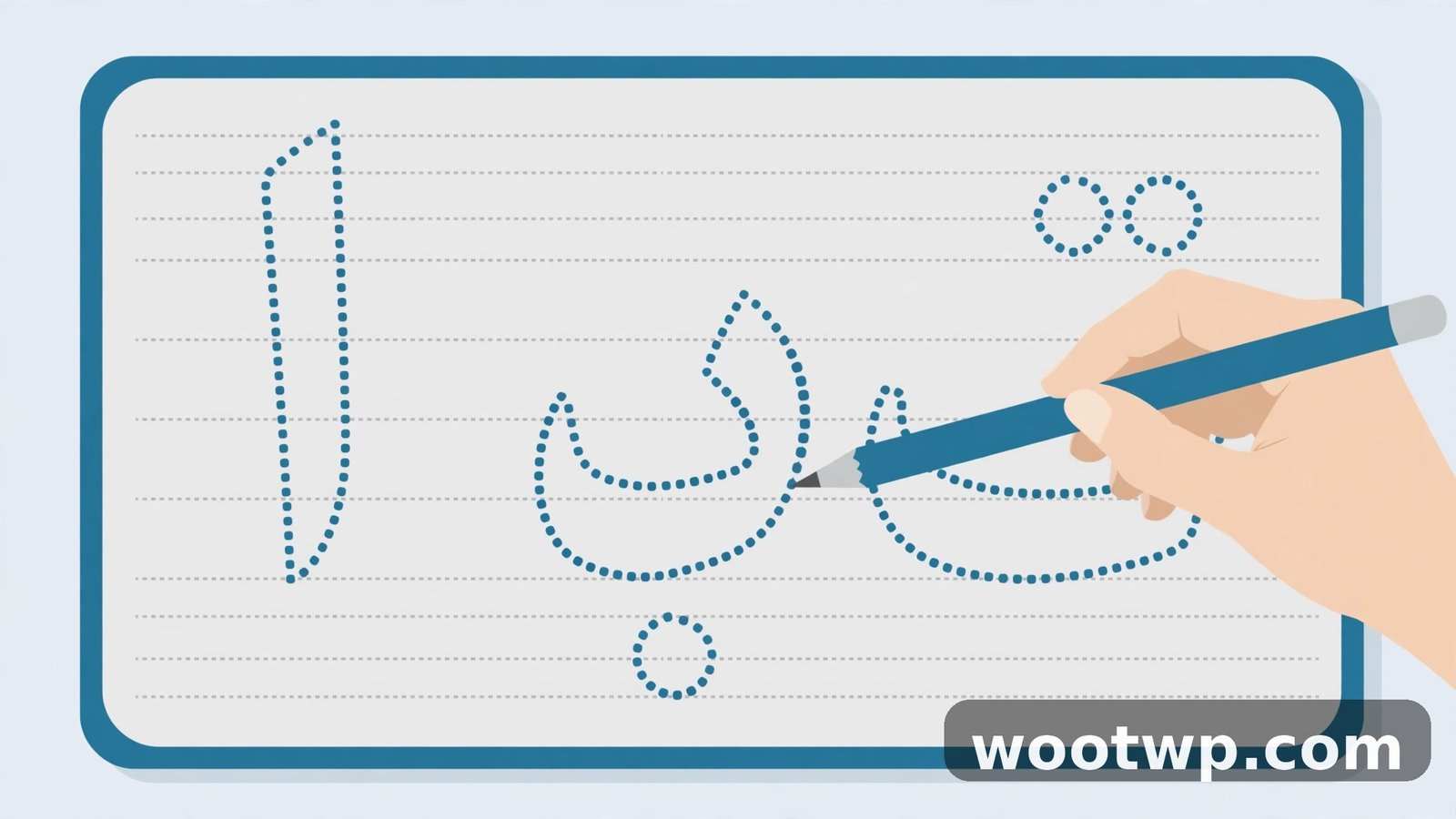
- Trace and write every letter by hand. Writing builds a kind of memory that looking never does. Trace each letter, then write a full row of it from memory, in all four forms. Write slowly and copy the stroke order: Arabic letters are drawn in a set order, and following it makes your writing look right and feel natural. A few minutes of handwriting a day beats an hour of staring at a chart once a week.
- Read real words from day one. Do not wait until you know all 28 letters to start reading. After your first ten letters you can already sound out short words. Try باب (bab, door), بيت (bayt, house), ماء (ma, water), كتاب (kitab, book), and سلام (salam, peace). Reading real words teaches you how letters behave together, and it gives you the small wins that keep you going.
The 28 Arabic Letters Grouped by Shape
Learning by shape cuts the work down. Many letters share one skeleton and differ only in dots or a small extra stroke. Learn the skeleton once, then learn which dots go with it.
- The dots group: ba, ta, tha, noon, ya. Ba (ب) has one dot below. Ta (ت) has two dots above. Tha (ث) has three dots above. Noon (ن) has one dot above. Ya (ي) has two dots below. These five cause the most beginner mix-ups, so drill them as a set until the dot pattern is automatic.
- The curves: jeem, ha, kha. Jeem (ج) has one dot below the curve, ha (ح) has none, and kha (خ) has one dot above. Their sounds are very different: jeem is like the "j" in "jam", ha is a breathy "h" from deep in the throat, and kha is the scratchy sound in the Scottish word "loch".
- The teeth: seen and sheen. Seen (س) has no dots and sheen (ش) has three dots above. Their shapes are like a row of small teeth. Seen sounds like "s" and sheen like "sh".
- The loops: sad, dad, tah, zah. Sad (ص) and dad (ض) share a loop shape, with dad adding one dot above. Tah (ط) and zah (ظ) share a taller loop, with zah adding one dot above. Sad, dad, tah, and zah are the emphatic consonants: they are pronounced with the tongue pulled back, which gives them a heavier sound than their plain partners.
- The deep throat pair: ayn and ghayn. Ayn (ع) and ghayn (غ) share a shape, with ghayn adding one dot above. Ayn has no English match: it is a sound made by tightening the throat. Ghayn is like a gargled "r", close to the French "r". These two take the longest to learn, so give them extra listening time.
- The round pair: fa and qaf. Fa (ف) has one dot above and qaf (ق) has two dots above. Fa sounds like "f". Qaf is a deep "k" made at the back of the throat.
- The tall pair: kaf and lam. Kaf (ك) and lam (ل) are tall letters that rise above the line. Kaf sounds like "k" and lam like "l". Their final forms look different from their start forms, so practise those.
- The round letters: meem, ha, waw. Meem (م) is a small circle with a tail, ha (ه) is a loop, and waw (و) is a hook that sounds like "w" and also serves as the long vowel "oo". Waw is one of the six letters that never connect forward.
- The straight letters: alif, dal, dhal, ra, zay. Alif (ا) is a straight vertical stroke and sounds like a long "a". Dal (د) and dhal (ذ, with one dot above) sound like "d" and the "th" in "this". Ra (ر) is a rolled "r" and zay (ز) sounds like "z". All five are non-connectors, so they break words into visible chunks.
- The tail: ya. Ya (ي) appears in the dots group for its dots, but its final form has a long tail that drops below the line. It sounds like "y" and also serves as the long vowel "ee".
Work through one group a day, saying each letter, writing each form, and testing yourself with the dots covered. When you can tell ba from ta from tha at a glance, the rest of the alphabet starts to feel easy.
Short Vowels, Long Vowels, and the Marks That Change Meaning
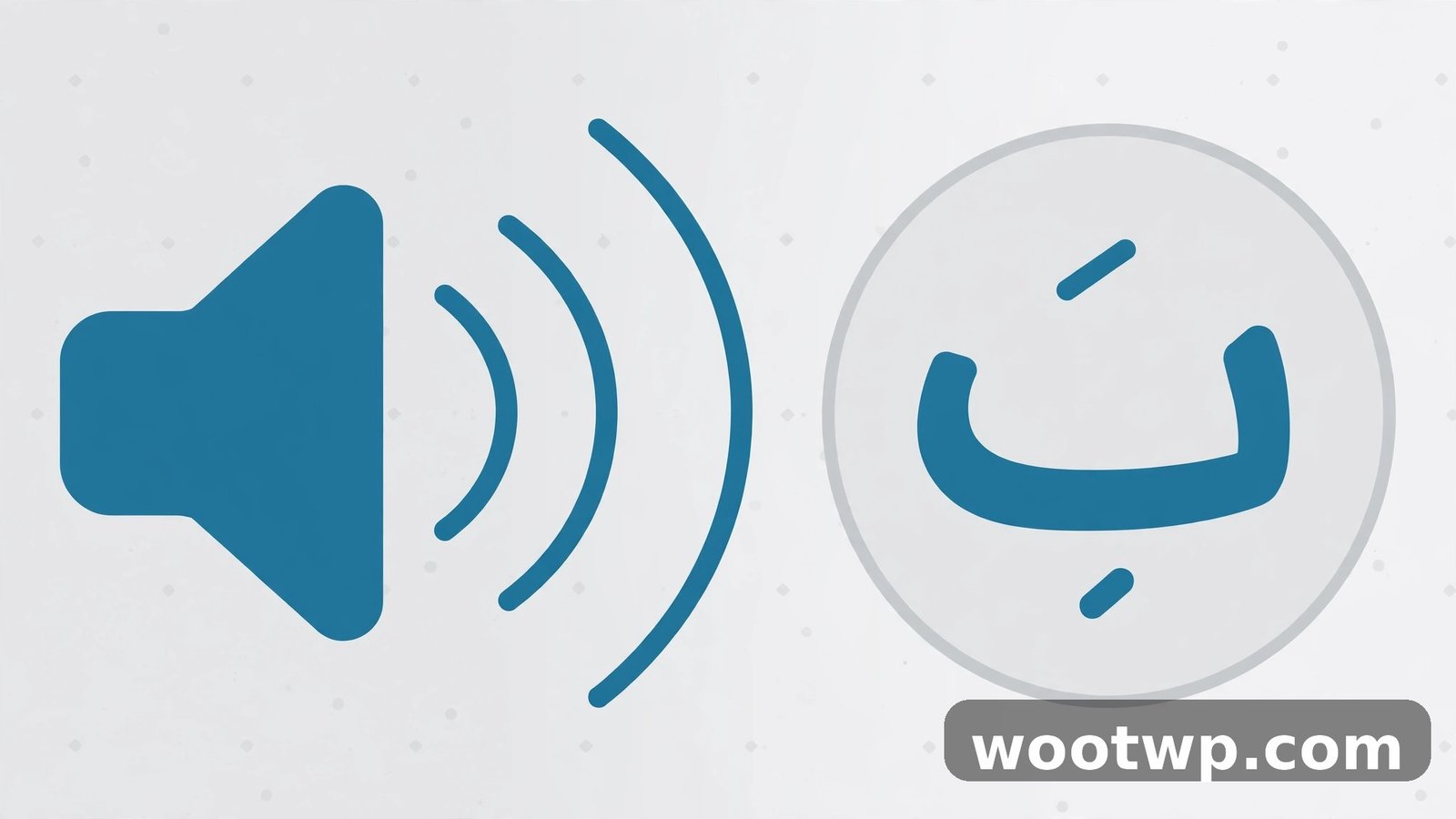
Short vowels in Arabic are marks, not letters. Fatha is a small stroke above the letter for a short "a" (بَ, ba). Damma is a small curl above for a short "u" (بُ, bu). Kasra is a stroke below for a short "i" (بِ, bi). Sukun is a small circle above the letter showing it has no vowel (بْ). Shadda looks like a small "w" above a letter and means the consonant is doubled: the difference between درس (darasa, he studied) and درّس (darrasa, he taught) is a shadda. Tanwin doubles the vowel mark at the end of a word and adds an "n" sound, which you meet in formal and Quranic text.
Long vowels use letters: alif for a long "aa", waw for a long "oo", and ya for a long "ee". So the difference between a short and a long vowel can change a word completely. Kataba (he wrote) and kaataba (he corresponded) differ only in vowel length. Listen for the length when you practise, and stretch long vowels clearly when you speak. Short vowels are quick, long vowels are held about twice as long.
Two more rules make reading much easier. First, the definite article "al" (ال) changes with sun letters and moon letters. Before a moon letter it stays "al", as in al-qamar (the moon). Before a sun letter the "l" sound melts into the next letter and doubles it, so al-shams (the sun) is pronounced "ash-shams". The sun letters are ta, tha, dal, dhal, ra, zay, seen, sheen, sad, dad, tah, zah, lam, and noon. Second, the letter hamza (ء) is a glottal stop, the catch in the throat between the two parts of "uh-oh". It can sit on its own or on top of alif, waw, or ya, and its spelling rules are one of the trickier parts of Arabic writing. Learn to recognise it early and do not worry about writing it perfectly until later.
Common Mistakes When You Learn the Arabic Alphabet
Most beginners make the same handful of mistakes. Knowing them in advance saves you weeks.
- Mixing up the dotted letters. Ba, ta, tha, noon, and ya differ only in dots. Drill them as a set, with the dots covered and uncovered, until you answer without thinking.
- Learning names but not sounds. Knowing that a letter is called "ayn" does not mean you can say it or hear it. Every letter needs listening and speaking practice, not just reading.
- Ignoring short vowels, then guessing. Reading without harakat is a skill for later. While you learn, read material that includes the marks, and sound out every vowel. Guessing builds bad habits that are hard to undo.
- Making long and short vowels the same length. Vowel length changes meaning in Arabic. Hold long vowels clearly and keep short ones short.
- Treating emphatic consonants like plain ones. Sad is not just a heavier seen, and tah is not just a heavier ta. Practise the emphatic pairs side by side until your ear and mouth can tell them apart.
- Reading left to right out of habit. Your eyes will drift the wrong way for the first week. Use your finger or a pen to track right to left until the direction feels natural.
- Skipping handwriting. Typing Arabic is useful, but writing by hand is what fixes the letter forms in memory. Even five minutes of writing a day makes a real difference.
- Leaning on transliteration. Latin-letter spellings of Arabic are inconsistent and they hide the real script. Drop transliteration as soon as you can sound out words, and use it only as a pronunciation hint beside the Arabic, never instead of it.
How Long Does It Take to Learn the Arabic Alphabet?
With 15 to 20 minutes of daily practice, most learners can recognise all 28 letters and their forms within a few weeks. That is recognition, not fluency. Reading connected words smoothly takes longer, because you are also learning vocabulary and the habit of reading without vowel marks. Writing takes longer still, because your hand has to learn 28 new shapes.
The honest answer is that the alphabet itself is the quick part of learning Arabic. Grammar and vocabulary are the long road. That is good news: a few focused weeks on the script gives you a tool you will use for the whole journey. The learners who stall are usually the ones who practise in long, rare bursts instead of short, daily ones. Fifteen minutes every day beats two hours every Sunday, because your brain keeps the shapes fresh between sessions. If you miss a day, do not double up the next day to catch up. Just pick up where you left off.
Practice the Arabic Alphabet on Your Phone With Baraem
An app helps most at the stage where you need audio, instant feedback, and a reason to come back daily. Baraem: Arabic Learning teaches the alphabet with all four forms of each letter, native-style audio for every sound, and a tracing pad where you draw each letter with your finger to build muscle memory. The lessons are in English, which suits beginners learning from English, and the writing practice module follows the alphabet with reading, listening, and vocabulary work. I covered the full feature list, including the 320 themed words, grammar lessons, and Gulf dialect pack, in this Baraem app overview.
The guided learning path sets the order for you, so you are not deciding what to study each day, and the streak system keeps the daily habit visible. Baraem is free to start on Android, with an optional Pro upgrade at $3.99 a month, $24.99 a year, or $49.99 for lifetime access. If you want a structured way to practise the alphabet with audio and tracing on your phone, you can download Baraem free on Google Play and start with the alphabet module today.
A Simple 14-Day Plan to Learn the Arabic Alphabet
Use this plan as a starting point and repeat any day that still feels shaky. Keep each session to 15 or 20 minutes.
- Days 1 to 3: the dots group and the curves. Learn ba, ta, tha, noon, ya, then jeem, ha, and kha. Say each letter with audio, write a row of each in its isolated form, and test yourself by covering the dots.
- Days 4 to 6: teeth, loops, and throat letters. Learn seen, sheen, sad, dad, tah, zah, ayn, and ghayn. Practise the emphatic sounds against their plain partners, and give ayn and ghayn extra listening time.
- Days 7 to 9: forms, breakers, and vowel marks. Learn the four forms with five letters, then the six non-connectors, then fatha, damma, kasra, sukun, and shadda. Read your first ten real words with the marks shown.
- Days 10 to 12: reading practice. Read short words and shop signs, learn the sun and moon letter rule, and start reading without the vowel marks on words you already know. Keep a small notebook of words you can read, or track them in a notes app. If you want a simple system for that, this guide to using Google Keep for notes and reminders works well for a daily practice list.
- Days 13 to 14: review and a first passage. Retest all 28 letters from memory, rewrite the ones you miss, and read a short children's passage or a set of simple sentences out loud. Finish by writing the alphabet from memory, in order, with no chart to peek at.
After day 14, the job changes from learning letters to reading more. Read a little every day, keep writing by hand, and add vocabulary in themed groups such as family, food, and travel. The alphabet will fade into the background, which is exactly what should happen.
FAQs About How to Learn the Arabic Alphabet
How many letters are in the Arabic alphabet?
There are 28 letters in the Arabic alphabet. Each letter has a name, a sound, and up to four written forms depending on where it sits in a word. Six letters never connect to the letter after them, which creates the small gaps you see inside Arabic words.
Is the Arabic alphabet hard to learn?
The alphabet itself is not hard, but it is unfamiliar. The new direction, the joined-up letters, and a few new sounds take a few weeks of daily practice to feel natural. Most learners find the alphabet is the quickest part of learning Arabic, and the real work starts with vocabulary and grammar.
Do I need to learn to write Arabic, or is reading enough?
Reading alone will get you a long way, but writing fixes the letters in memory far faster. Tracing and writing by hand teaches you the forms, the stroke order, and the dot patterns in a way that looking never does. Even five minutes of writing a day is worth it, and it pays off when you start writing words and sentences.
What is the difference between the Arabic alphabet and an abjad?
An abjad is a writing system built around consonants, and the Arabic alphabet is one. Short vowels are shown with optional marks rather than full letters, which is why Arabic text often appears without vowel marks. The marks are used in learner material, children's books, and the Quran, and beginners should learn to read with them before moving to unmarked text.
Can I learn the Arabic alphabet without a teacher?
Yes, if you use audio. The risk of learning alone is pronouncing the new sounds wrong and never noticing, especially ayn, ghayn, and the emphatic consonants. Listen to native speakers, record yourself, and compare. An app with audio for every letter, a class, or a tutor for a few sessions can catch errors early, before they become habits.
Should I learn Modern Standard Arabic or a dialect first?
Learn the alphabet first, because the script is the same for both. After that, learn Modern Standard Arabic for reading and formal use, and pick up the dialect of the place you care about for speaking. If you live in or travel to the Gulf, Gulf Arabic phrases are the natural next step after the alphabet, and the same 28 letters carry you there.
Conclusion
To learn the Arabic alphabet, start with the 28 letters in shape groups, say each one out loud with audio, learn the four forms and the six non-connectors, add the short vowel marks, and write every letter by hand. Read real words from the first week, follow a short daily plan, and let the alphabet become a background skill instead of a barrier. With 15 to 20 minutes a day, you can go from staring at strange shapes to sounding out real Arabic words in a few weeks, and that single skill opens up every part of the language that comes next.